Ancient Carthage
12 February 2026 06:44 pm![[personal profile]](https://www.dreamwidth.org/img/silk/identity/user.png) expedition_retirement
expedition_retirementThe final site we visited on our trip was the archeological sites of ancient Carthage. Like most people, the extent of my knowledge of Carthage was limited to the story of Hannibal's army and its elephants crossing the Alps to attack Rome, and the eventual destruction of Punic Carthage by the Romans. Originally settled by the Phoenicians, Carthage would grow to be the largest metropolis in the world before being destroyed by the Romans. The Romans then built their own city on the site as part of their African province. Because there has been a population center almost continuously since then, which means the ruins here have been scavenged heavily for building materials for later structures, so that the remaining ruins here are not particularly impressive. However, because of the historical significance of this site, it is listed as a UNESCO World Heritage Site.
Our first stop was to take a look at the ruins of the Roman cisterns. Located at the end of a long aqueduct that brought water down from the nearby mountains, these cisterns stored the water that supplied the Roman city of Carthage. The complex is rather massive, which gives a better feel for the size of the population here during the Roman Empire. Archeologists have begun excavating a few of the cistern chambers, though most are at least partially filled with debris and other sediments.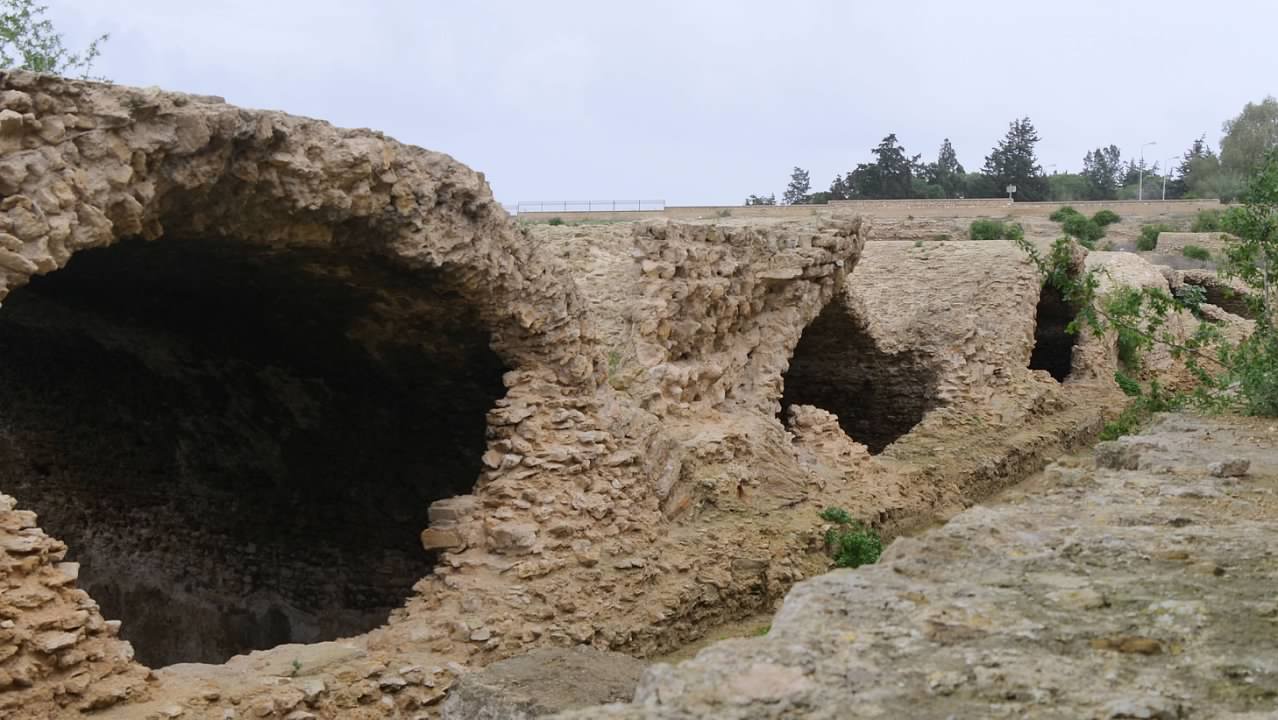
 We then visited the site of the city itself. There are sections of columns and other architectural elements stacked around, and we got a good look at the excavated ruins of some homes from the Punic period. Otherwise, there wasn't a great deal of interesting structures to look at here.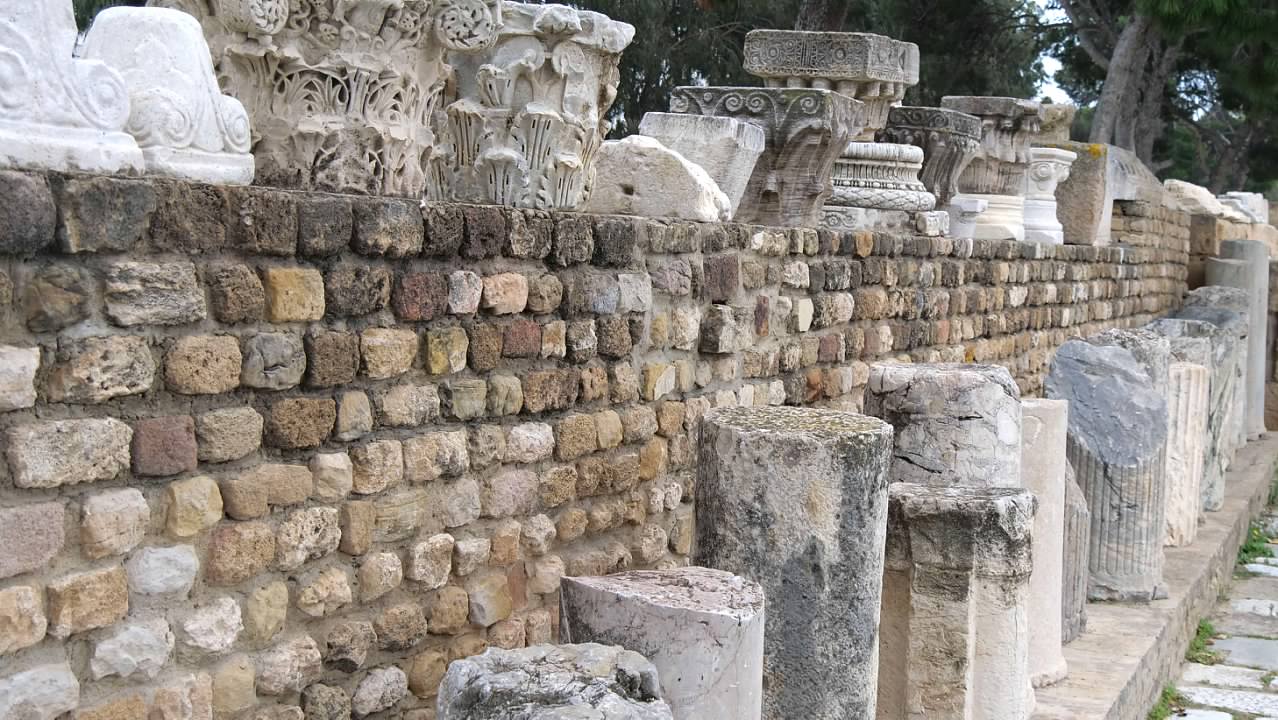
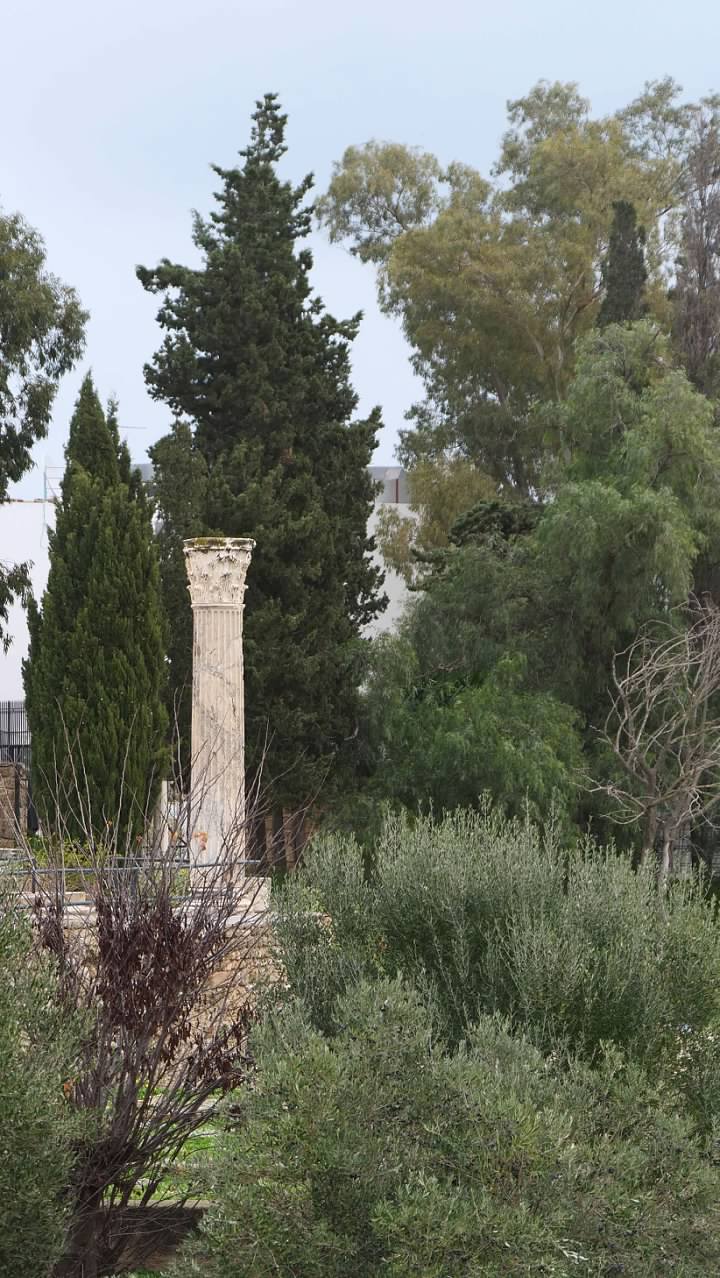
 Our next stop was the Tophet of Salammbô, a Punic sacred site that may have been used to bury the remains of child sacrifices. Scattered around the site were dozens of memorial markers that had been excavated from the site. There was also an ongoing excavation on the site, and we could see some burial urns that were used to bury the remains.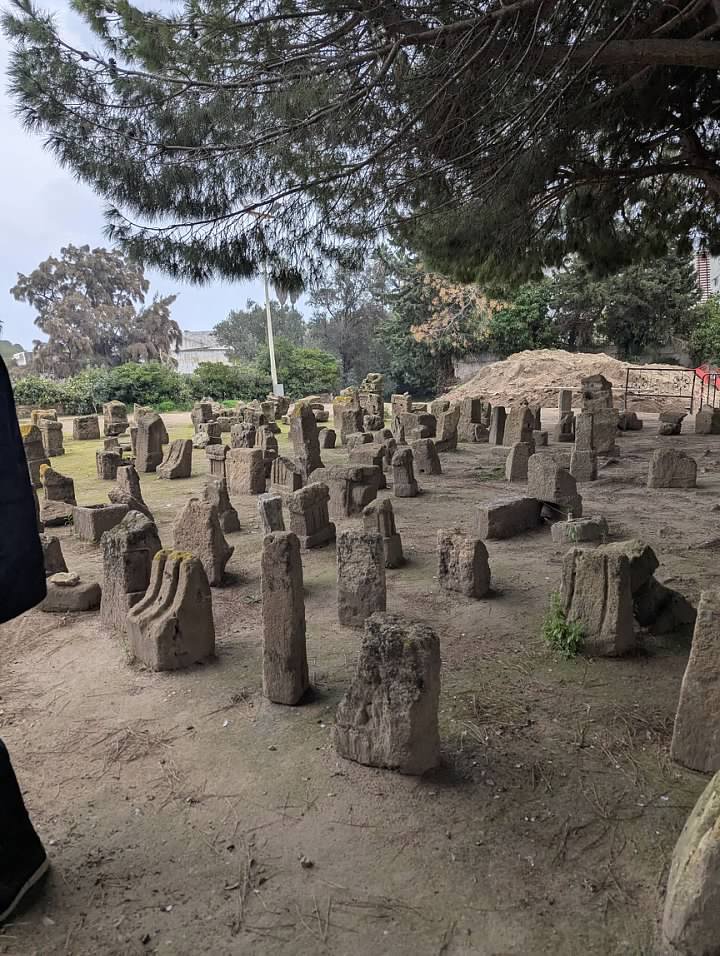
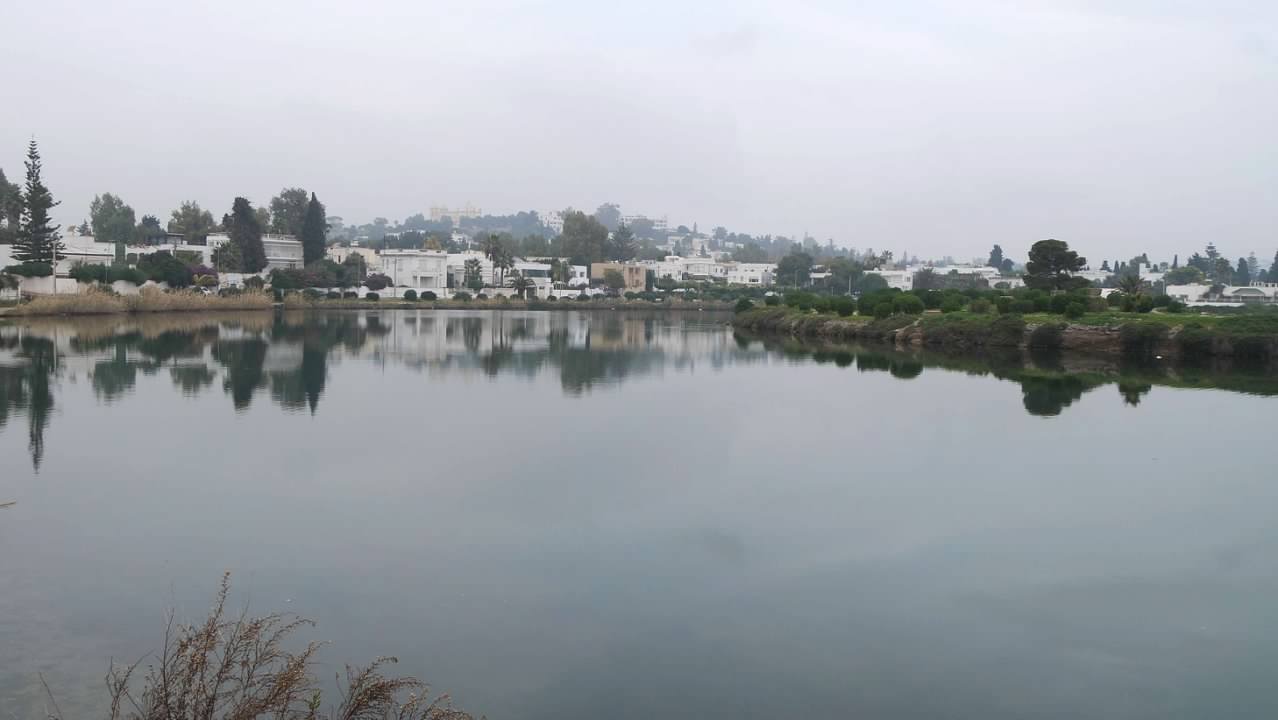
 Finally, we made a stop at the ancient port of Punic Carthage. This port was part of the strength of the Punic Empire, providing both a commercial harbor, and a heavily protected naval port that sheltered the Carthaginian fleet.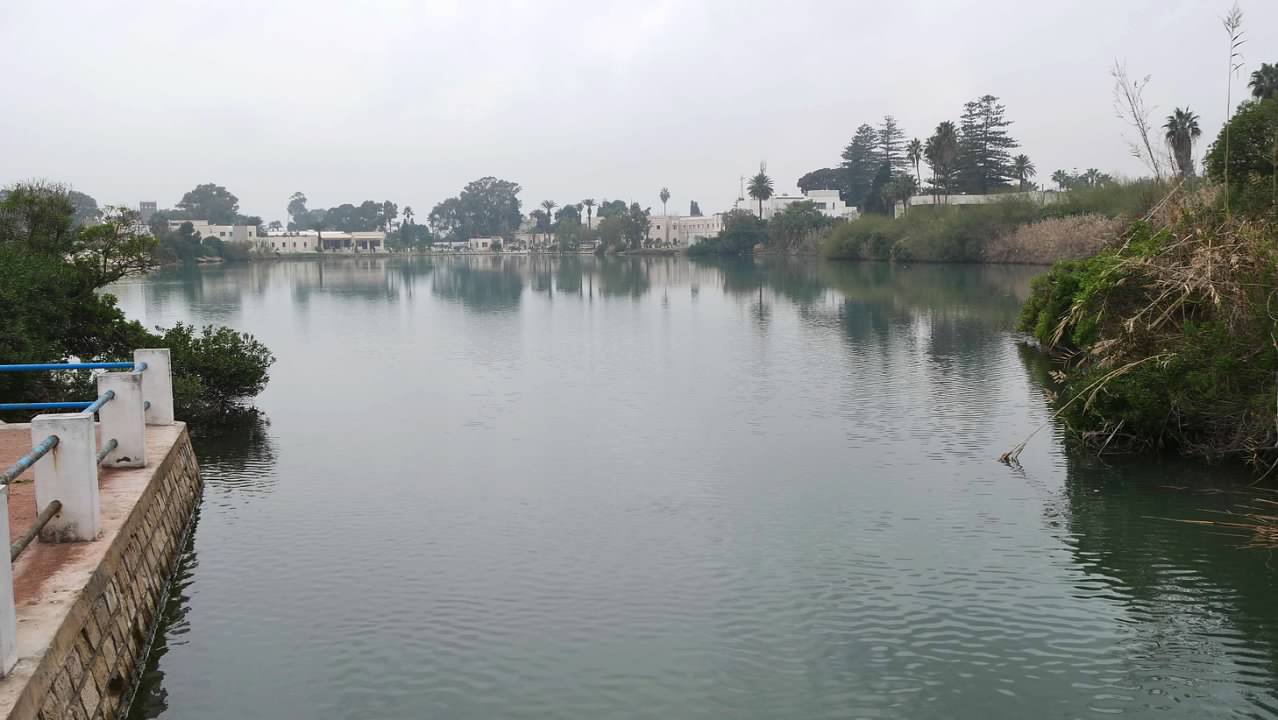
Our first stop was to take a look at the ruins of the Roman cisterns. Located at the end of a long aqueduct that brought water down from the nearby mountains, these cisterns stored the water that supplied the Roman city of Carthage. The complex is rather massive, which gives a better feel for the size of the population here during the Roman Empire. Archeologists have begun excavating a few of the cistern chambers, though most are at least partially filled with debris and other sediments.