Tunisia: Diverse landscapes
23 January 2026 12:31 pm![[personal profile]](https://www.dreamwidth.org/img/silk/identity/user.png) expedition_retirement
expedition_retirement Located in North Africa, we approached our visit with a certain idea about what the landscapes would look like. Everyone knows that northern Africa is the Sahara desert, right? We anticipated desert landscapes, with arid, rocky expanses and areas of sand dunes, with the occasional oasis scattered about. But we weren't really prepared for the diversity of landscapes we actually encountered.
The northern portion of Tunisia is decidedly Mediterranean in climate, with a landscape that surprised us with it greenness. This area of Tunis was once the 'bread basket' of the Roman empire, providing grain that fed the city of Rome and its empire. This part of Tunisia was important even before Rome conquered it, home of the Phoenician (or, as the Romans called it Punic) empire of Carthage, rival to Rome and home of Hannibal, the general who lead an army across the Alps to attack Rome itself. We visited in January, which is in the rainy season, and the fields were green with grain crops that were just beginning to grow. Orange groves were heavy with ripe oranges (which we were served almost daily and were extremely delicious), and the greenery belied the overall dryness of this country.
 But as we moved south from Tunis, the land quickly became dryer and browner, and soon the agriculture shifted from fields of grain and groves of fruit to olive groves. And as we continued south, the olive trees became more and more spaced apart, minimizing the competition between them for the scarce rainfall.
 Finally, we reached the true desert. At first it was brown and rocky, with hills and gullies. The gullies were filled with earthworks designed to capture and contain water when the rare rain fell, each with a few olive trees planted behind them. The hillsides were barren, and even the flat areas hosted very little vegetation, just some scrubby bushes and the occasional palm tree.

 Finally, we arrived in the sand dunes that are what most people think of when they envision the Sahara. We never got very far into the desert, which extends for hundreds of miles further south, and the sand dunes where we were were not very tall, but the wind was blowing the sand, and it was easy to see how the dunes move across the landscape with the wind.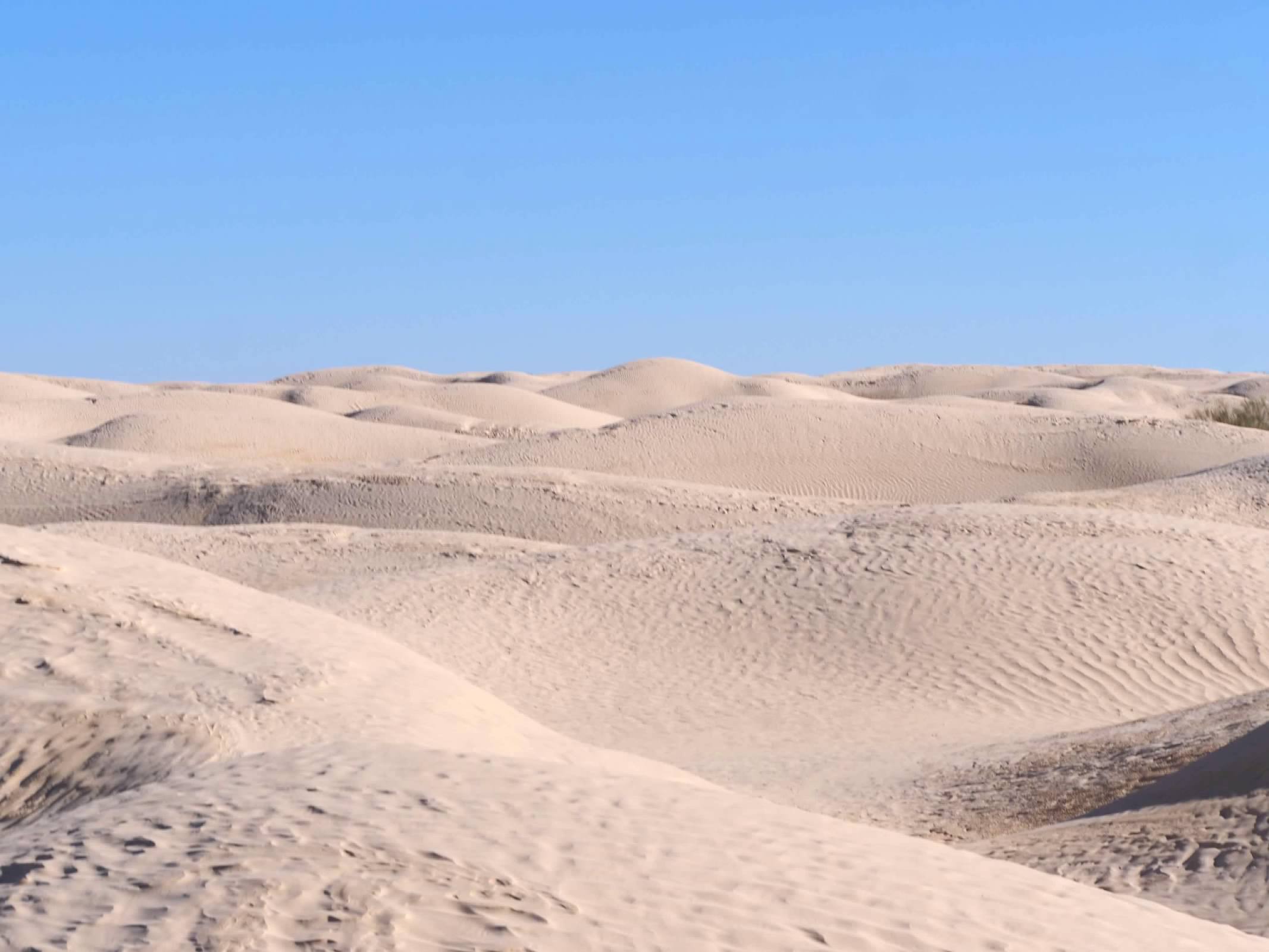
 Later, we would drive across the barren bed of a dried salt lake. Here there was absolutely no vegetation, just a barren, brown flatness that extended off to the distant mountains. This lake does collect run off from the surrounding desert and has water just below the surface, but it is highly saline, toxic to most plants. The salt here has been mined for generations, with operations that dig up the salt laden sand and dirt and use the saline water to rinse the dirt from the salt.
 But just beyond the lake bed is a large oasis that is the home to a large date farming operation. There is an entire town here on the edge of the oasis, and date palms cover most of the fertile area of the oasis. Dates are the primary cash crop, but these farms operate on a three tiered system, with the date palms above, a middle tier of fruit trees growing below them, and plots of vegetables growing on the ground below those. This system supplies the community with both food and revenue, and keeps the town alive.
 Finally, back in the north, we discovered the coast. Here Africa meets the Mediterranean, and there is little difference between the landscape here and that across the water to the north. Some of the architecture might be different (although not that different when compared to Andalusia in Spain), but at a glance you might think of yourself anywhere along the Spanish, or Italian, or Greek coasts.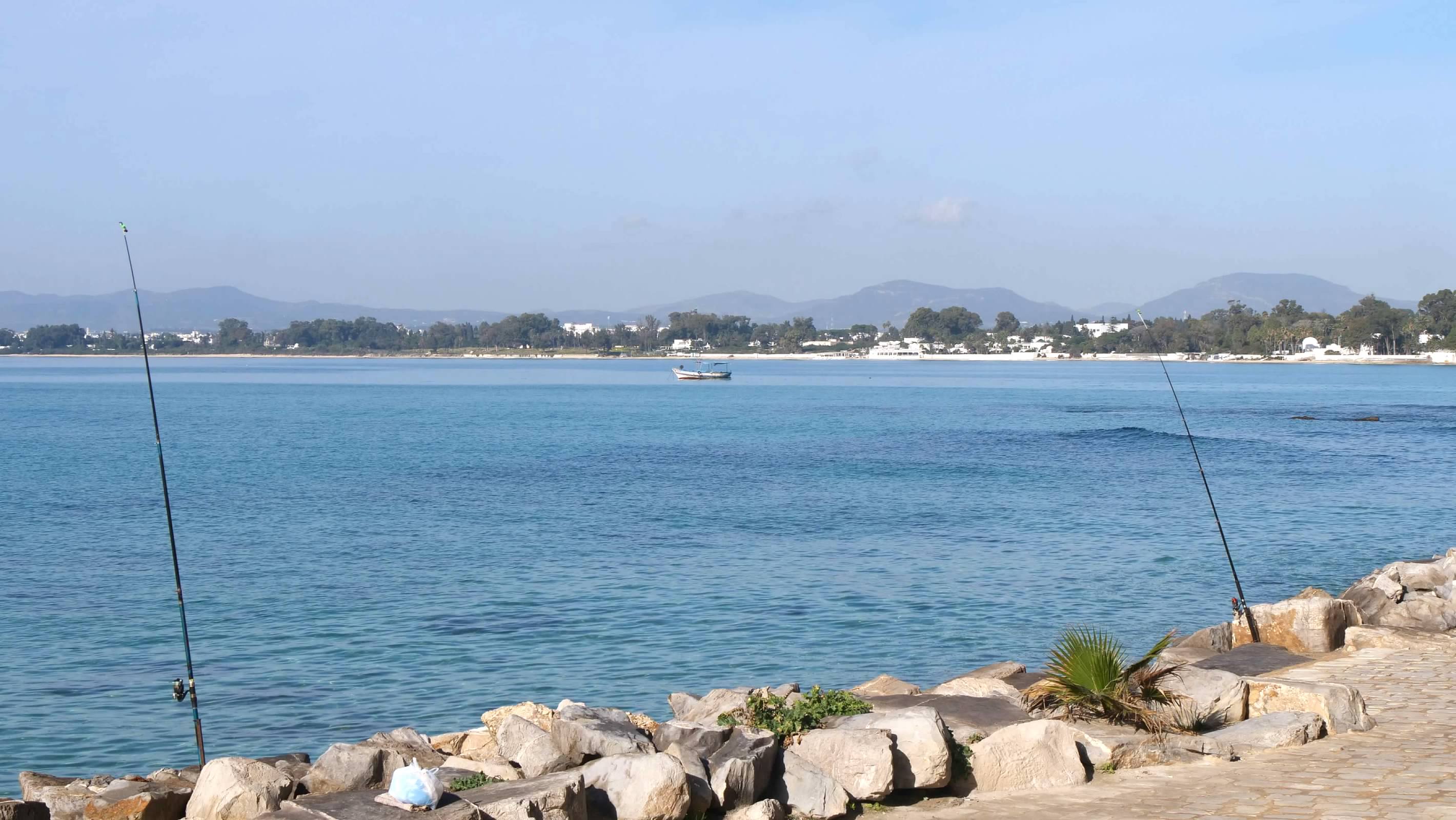

The northern portion of Tunisia is decidedly Mediterranean in climate, with a landscape that surprised us with it greenness. This area of Tunis was once the 'bread basket' of the Roman empire, providing grain that fed the city of Rome and its empire. This part of Tunisia was important even before Rome conquered it, home of the Phoenician (or, as the Romans called it Punic) empire of Carthage, rival to Rome and home of Hannibal, the general who lead an army across the Alps to attack Rome itself. We visited in January, which is in the rainy season, and the fields were green with grain crops that were just beginning to grow. Orange groves were heavy with ripe oranges (which we were served almost daily and were extremely delicious), and the greenery belied the overall dryness of this country.